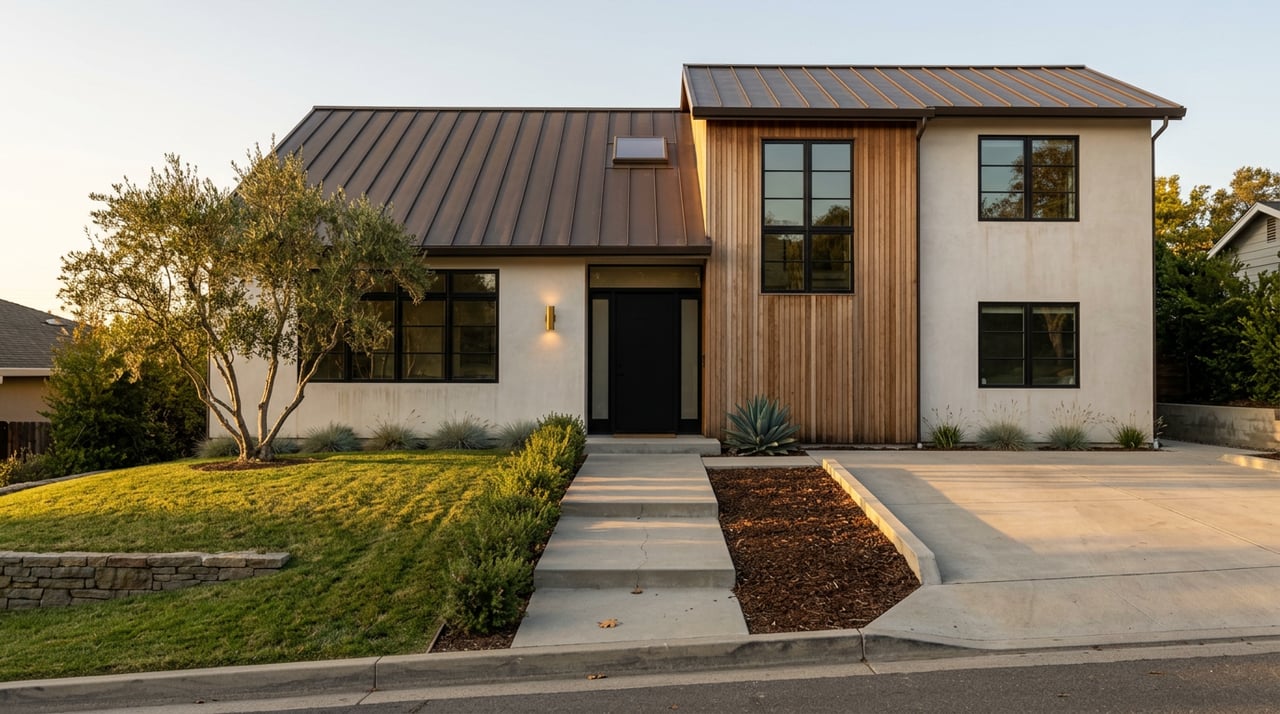
Berkeley's Bidding Wars Are Racing an IPO Clock, and the Price Data Shows It
September 17, 2026
September 17, 2026
A line in a recent Berkeley real estate newsletter almost slipped past unnoticed: agents were seeing more aggressive offers this spring, and one likely reason was that buyers were trying to close before a wave of anticipated tech wealth hit the market. No hedging, no qualifier. Just an agent naming the thing out loud that usually stays in private conversation between buyers and their lenders.
If you have been watching Berkeley's median price and trying to decide what it means for your own search, that line matters more than the median itself. Because the price data from this spring does not show a market getting uniformly more expensive. It shows a market splitting into two speeds, with one group of buyers paying a real premium to win specific homes right now and everyone else watching from a much calmer distance.
In the first quarter of 2026, a fixer-upper on Spruce Street in North Berkeley sold for $557 per square foot after sitting on the market without selling in 2025. In that same quarter, a home on Beverly Street, updated, with additional lower-level space and a rare combination of San Francisco and Bay views, sold for $1,955 per square foot. Same neighborhood. Same three-month window. A gap of nearly $1,400 per square foot.
That is not a fluke of one unusual sale. The pattern repeated in the second quarter. Between April and June, a five-bedroom home on Hillview sold for $537 per square foot in the Berkeley Hills, while a three-bedroom on Arch sold for $1,428. Those Berkeley Hills homes moved fast too, averaging 21 days on market in the second quarter, but the properties commanding top dollar were not just newer or bigger. They were finished, walkable, and view-forward, and buyers were willing to pay a steep premium specifically for those traits.
Redfin's tracked sales tell a version of the same story from a different angle. Over the three months ending in May 2026, North Berkeley's median sale price actually fell 6.7 percent year over year, even as the median price per square foot rose nearly 17 percent over that same period. A falling median alongside a rising price per square foot is not something a healthy, evenly-priced market produces. It is what happens when the mix of what's selling changes, when more of the transaction volume shifts toward smaller, highly finished homes that buyers are willing to pay top dollar for per square foot, even if the total price tag comes in lower than a larger, less finished property down the street.
Berkeley's own market newsletter tied the spring's more aggressive bidding to a specific, dated expectation: that OpenAI and Anthropic would go public later in 2026, and that the wealth created by those IPOs would flow into Bay Area real estate. Whether or not the timing holds exactly, the psychology is already visible in the sales data. ABC7 reported on the broader Bay Area version of this dynamic in August, with one San Francisco agent describing a climate where buyers are rushing in and sellers are holding back listings because both sides expect the market to get more competitive once IPO proceeds start landing in bank accounts. The Real Deal's July 2026 rankings of top Bay Area brokerages described brokers actively preparing for a surge of newly wealthy buyers once those IPOs price, with one broker's blunt advice to clients being simply to buy now rather than wait.
That kind of anticipatory demand does not spread evenly across a market. It concentrates on the properties that are already easiest to imagine living in immediately: move-in ready, walkable to daily errands, with a view or a layout that would be hard to replicate. A buyer with a pre-IPO stock grant and a short timeline is not going to bid aggressively on a fixer that needs eighteen months of permits. They are going to compete hardest for the home that lets them skip the renovation entirely. That is exactly the kind of property that sold for $1,955 per square foot on Beverly and $1,428 on Arch, while fixers on Spruce and larger, less finished homes on Hillview sold for a fraction of that per square foot.
The Beverly Street sale's proximity to Northbrae's Hopkins and Monterey shopping corridor is not incidental. That stretch has functioned as North Berkeley's daily-errands anchor for decades, built around Monterey Market's produce, Monterey Fish and Magnani Meat for the dinner-table basics, and Hopkins Street Bakery and Gioia Pizza for the parts of the week nobody wants to cook. A home within an easy walk of that corridor is not just buying a location. It is buying a version of daily life where errands take twenty minutes instead of a drive and a parking search.
That walkability premium has always existed in Berkeley. What's different in 2026 is who is competing hardest to pay it. When buyer urgency is being driven partly by a looming wave of new liquidity, the properties that already command a premium for convenience and finish level are the ones that see that urgency show up first and most visibly in the sale price. The fixer on Spruce is not competing in the same auction as the updated home on Beverly, even though a citywide median price would suggest they are neighbors in the same market.
If you are weighing Berkeley against Oakland, Albany, or El Cerrito using median price alone, you are missing the part of the picture that actually determines what you'll pay. Berkeley's median right now is an average of two different buyer pools moving at two different speeds:
North Berkeley's inventory has stayed exceptionally tight through this shift. Active listings held at 43 through the second quarter, unchanged from a year earlier, while 36 homes sold in that same window. That kind of scarcity means the properties at the top of the price-per-square-foot range are not going to loosen up simply because the IPO speculation eventually resolves one way or the other. The finished, walkable inventory was already scarce before anyone started talking about tech wealth. The speculation is accelerating a shortage that already existed.
Does this mean Berkeley's median price is meaningless? Not meaningless, but incomplete on its own. Treat the citywide or even neighborhood-level median as a starting point for research, not a number to anchor an offer against. Ask what specifically sold at that median, and whether it resembles the condition and location of the home you're considering.
Should I wait until after the IPOs happen to make an offer? That depends entirely on what you're buying. If you're competing for a finished, walkable home, waiting could mean bidding against more buyers with more cash later this year. If you're open to a property that needs work, the calmer end of the market has shown less urgency so far, and that may hold regardless of what happens on the IPO timeline.
What if I want a fixer specifically? The spread in the data is good news for you. Properties needing updates sold for meaningfully less per square foot in both quarters this year, and that gap gives a patient buyer real room to negotiate on price, timeline, or both.
Berkeley's market has always rewarded buyers who understand the difference between a neighborhood's reputation and the specific block, street, and finish level they're actually competing for. Right now that distinction matters more than usual, because the forces pulling this year's prices apart are not going to show up in a single median number no matter how often it gets quoted.
If you're trying to figure out where your own search falls on this spread, whether you're chasing a turnkey home near a walkable corridor or looking for room to negotiate on a project, Diana Sweet Homes can walk through the current inventory street by street rather than by citywide average. Start Your Home Search when you're ready to see what's actually available at your price point right now.
Stay up to date on the latest real estate trends.
Whether you are a first-time homebuyer or upgrading or downgrading and need to sell, there are always questions and concerns. I want to answer your questions and make sure you know that we can accomplish your needs and desires. Where there is a will there is a way. I look forward to working with you.