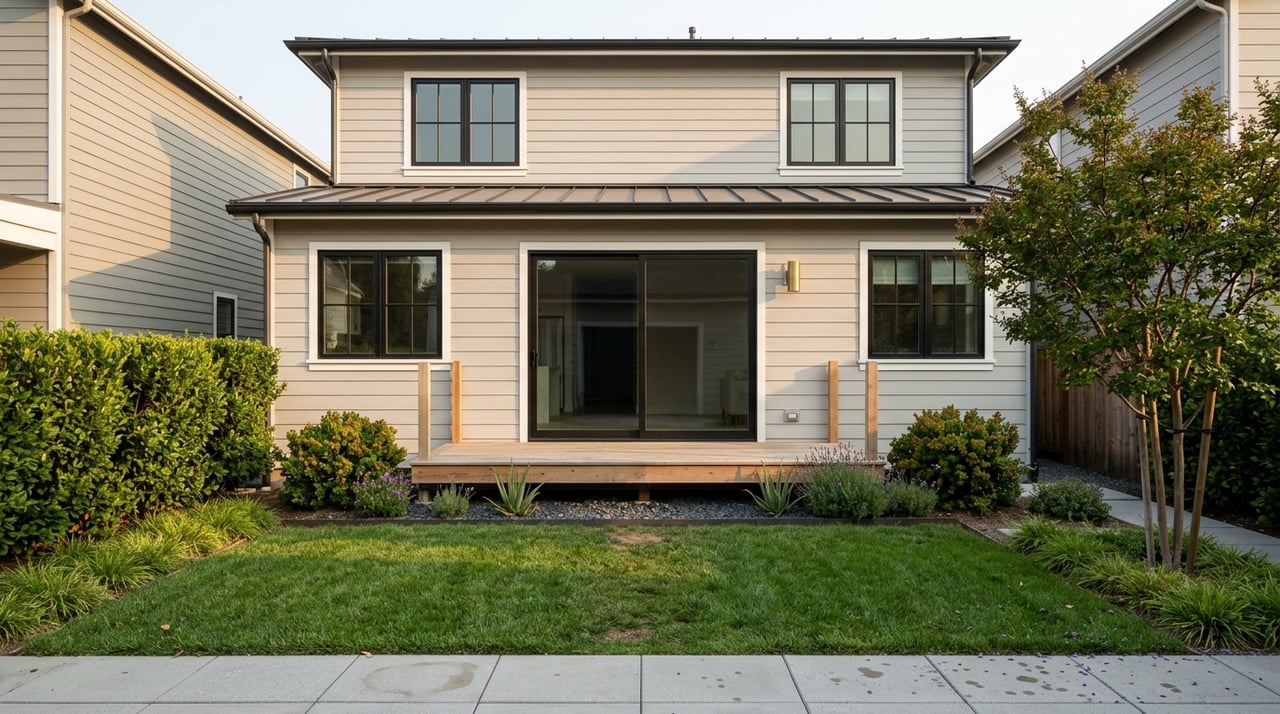
Albany CA Guide for Move-Up Buyers Seeking More Space
July 9, 2026
July 9, 2026
If you’re trying to buy more house in Albany, you already know the challenge: this is a small city with a big reputation, limited inventory, and plenty of competition for well-located single-family homes. As a move-up buyer, you are likely balancing space, budget, condition, and day-to-day livability all at once. This guide will help you understand what to expect from Albany’s single-family market, where tradeoffs tend to show up, and how to plan your next step with more clarity. Let’s dive in.
Albany is a compact 1.7-square-mile city made up largely of single-family homes, which naturally keeps supply tight. Current market snapshots reinforce that reality, with Redfin describing Albany as a most-competitive market, a median sale price of $1,309,216, about 7 offers on average, and roughly 14 days on market.
The active listing pool is also small. Trulia’s snapshot shows 24 homes for sale and 2 new listings, which gives you a sense of how narrow the selection can be at any given time. For a move-up buyer, that means the right house may not come up often, and when it does, timing matters.
If you are shopping for a 3 to 4-plus bedroom single-family home in Albany, it helps to enter the search with realistic pricing expectations. Trulia’s size-based estimates place 3-bedroom homes at $1,505,904 and 4-bedroom homes at $1,812,479.
Those figures should be treated as directional rather than definitive because the sample sizes are small. Still, they reflect an important truth about Albany: move-up homes often require a seven-figure budget before you even factor in updates, lot size, or exact location within the city.
Recent listings tell a similar story. A 3-bedroom, 1,285-square-foot single-family home was listed at $998,000, while a 4-bedroom, 1,847-square-foot single-family home was listed at $1,218,000. In a market this competitive, list price is only one piece of the picture.
Albany often sits in an interesting position for East Bay buyers. Based on citywide median sale prices, Albany at $1,309,216 is more expensive than Alameda at $1,101,841, Oakland at $884,471, and El Cerrito at $778,534, while remaining below Berkeley at $1,499,103.
That comparison can be useful if you are weighing whether to stretch for Albany or explore nearby alternatives. Albany is not the entry-level option in the East Bay, but for some buyers it can feel like a middle ground between Berkeley’s higher pricing and other nearby markets with lower median sale prices.
A big part of Albany’s character comes from its older housing stock. The city’s Housing Element says more than half of the housing stock is over 60 years old, and about 38.7% was built in 1939 or earlier. Most of that older stock consists of single-family homes.
Albany’s residential design guidelines say the majority of housing dates from 1910 to 1950 and commonly includes Spanish Revival, Tudor, Craftsman, and Minimal Traditional styles. If you appreciate architectural detail and neighborhood character, that can be a major draw.
For move-up buyers, though, older homes also shape how space feels. Many houses were designed long before today’s large open-concept layouts became common, so you should expect more compact floor plans, smaller room divisions, and homes that may live differently than newer suburban properties.
If you are moving up from a condo, townhouse, or smaller home, Albany can still offer a meaningful lifestyle upgrade. But if your benchmark is a newer suburban 4-bedroom house with a large great room, oversized primary suite, and expansive yard, Albany may ask for some compromise.
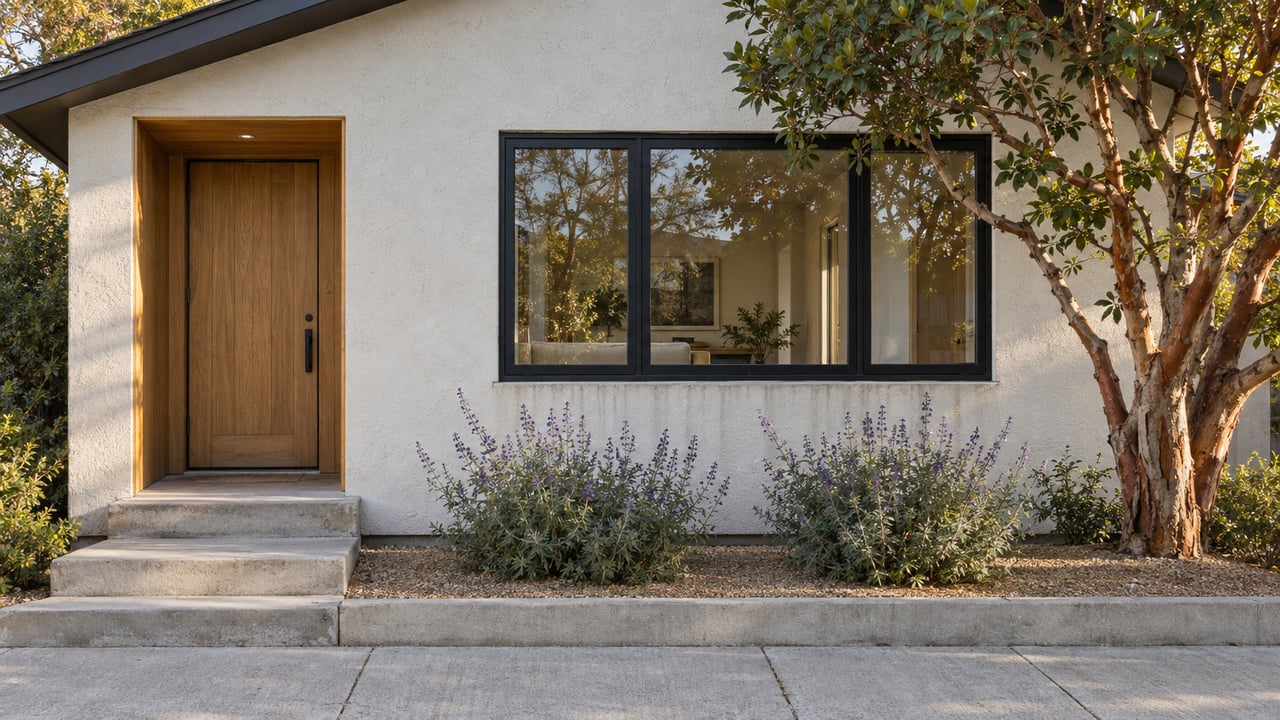
The city’s stock includes many bungalow-style homes and period houses on modest lots. The National Park Service notes that Craftsman bungalows are typically one to two stories with broad gables and open floor plans, but in Albany that often still translates to a smaller footprint than buyers expect elsewhere.
This is where it helps to focus on usable space instead of just bedroom count. A smart layout, a flexible bonus area, or a better indoor-outdoor connection can matter as much as raw square footage.
Yard expectations are another important part of the move-up conversation. Albany’s Jewel’s Terrace Park page describes the surrounding neighborhood as typical Albany bungalows on narrow streets, which is a helpful shorthand for the city’s smaller lot pattern.
In practice, that means many yards are functional rather than expansive. You may find room for outdoor dining, play space, gardening, or a pet, but not always the broad backyard footprint some buyers imagine when they hear “single-family home.”
Recent listings show the range. One 1940 3-bedroom home sits on a 2,500-square-foot lot, while a 1944 4-bedroom home sits on a 5,000-square-foot lot and advertises a large backyard plus possible ADU potential on a 50-by-100 lot. Larger lots do exist in Albany, and when they appear, they tend to draw strong attention.
One of the most common Albany tradeoffs is charm versus updates. Many buyers are drawn to period details, established streetscapes, and the personality that comes with older homes. At the same time, older homes often come with smaller rooms, aging systems, or a layout that may not fully match modern preferences.
Albany’s Housing Element notes that the oldest housing stock is concentrated east of Masonic Avenue, where more than 90% of homes were built before 1940 and almost all are single-family homes. It also notes that permits for structural improvements, remodels, and additions are common.
That pattern helps explain why two homes with similar bedroom counts can feel very different in value. A house with preserved character and meaningful system upgrades may compete in a very different way than a house that still needs foundational, electrical, roofing, or layout work.
In an older market like Albany, updates are not only cosmetic. They can affect comfort, maintenance, insurance conversations, and how confident you feel writing an offer.
A current listing at 810 Pierce Street gives a good example of what meaningful improvement can look like, with a new bolted foundation, sheared walls, breaker panel, flooring, and roof. For move-up buyers, that kind of work can change the equation significantly.
When you compare homes, it helps to separate finish-level updates from system-level updates. New paint and counters are nice, but foundation work, electrical improvements, and roofing may have a bigger impact on your long-term ownership experience.
Because Albany inventory is limited, your search works best when you know what matters most before the right house appears. In a fast market, hesitation can be costly, but so can stretching for a home that does not truly fit your needs.
Consider ranking your priorities in this order:
A clear framework helps you move quickly without losing perspective. It also makes it easier to compare homes that may look similar on paper but feel very different in person.
Albany Unified School District serves the city with 3 elementary schools, 1 middle school, 1 comprehensive high school, 1 continuation high school, and preschool. For many move-up buyers, school access is one factor in the search alongside house size, price, and commute patterns.
The key is to treat school access as part of your broader lifestyle planning rather than the only lens for evaluating a property. In a compact city like Albany, small differences in location can still affect your daily routine, even when the overall geography is relatively contained.
In a market with about 7 offers on average and homes moving in roughly 14 days, preparation matters. Albany is small enough that every listing can attract a slightly different buyer pool depending on condition, lot size, and architectural style.
A strong move-up strategy usually starts with a realistic budget, a short list of must-haves, and a clear understanding of where you are willing to compromise. In Albany, many successful buyers stay flexible on cosmetic details while staying disciplined on layout, location, and major systems.
It also helps to evaluate each home through both a market lens and a design lens. A house with smaller rooms but excellent natural light, strong flow, and future improvement potential may offer more value than a more polished home with a less functional layout.
Albany is not a broad, uniform market. It is a small housing pool with older homes, meaningful condition differences, and pricing that can move quickly based on lot utility, updates, and presentation.
That is why move-up buyers often benefit from disciplined, property-by-property analysis. A thoughtful approach can help you spot the difference between a home that is merely expensive and one that is truly aligned with your long-term goals.
If you are considering your next move in Albany, working with an advisor who understands architecture, neighborhood patterns, and competitive offer strategy can make the process feel much more grounded. When you’re ready to explore your options, Diana Sweet can help you search with clarity, evaluate tradeoffs, and move forward with confidence.
Stay up to date on the latest real estate trends.

Whether you are a first-time homebuyer or upgrading or downgrading and need to sell, there are always questions and concerns. I want to answer your questions and make sure you know that we can accomplish your needs and desires. Where there is a will there is a way. I look forward to working with you.