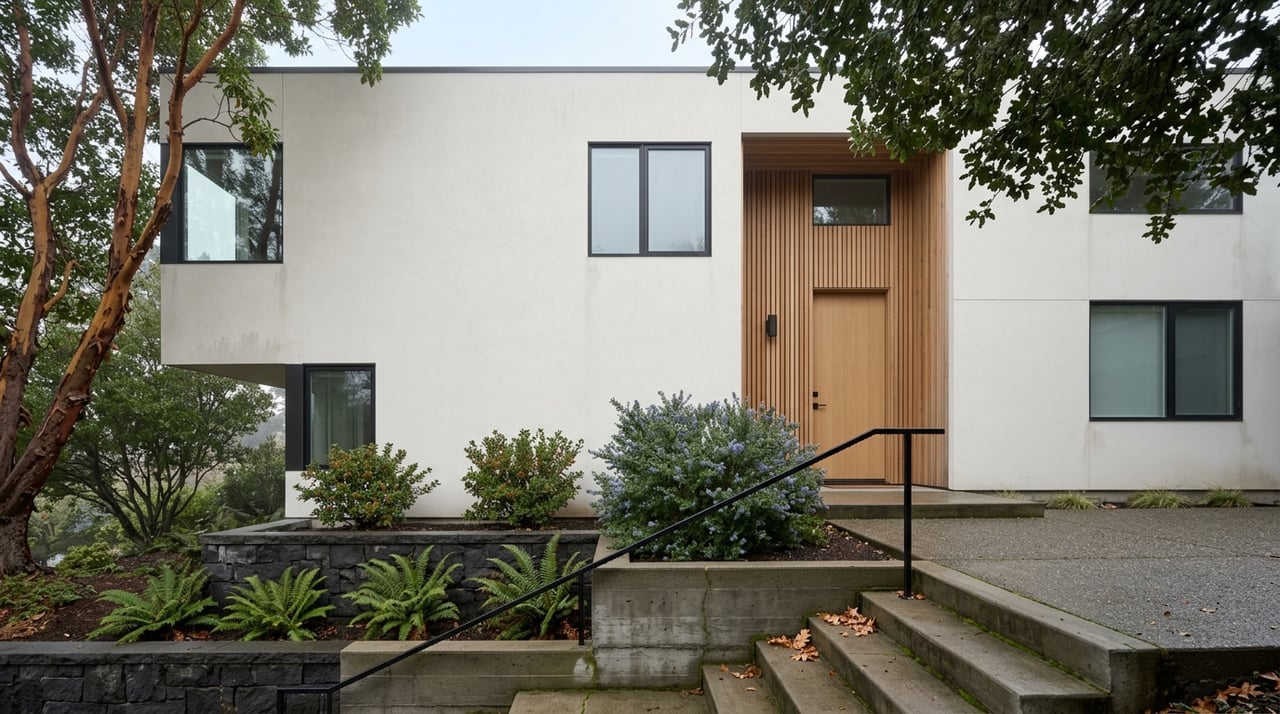
Berkeley Hills vs Flats Homes: How Each Area Lives
June 4, 2026
June 4, 2026
If you are choosing between the Berkeley Hills and the flats, you are really choosing between two different versions of daily life in the same city. A few miles can change the weather you feel, the streets you drive or walk, and even the kind of home you are likely to find. Understanding those differences can help you focus your search, avoid surprises, and make a more confident decision. Let’s dive in.
Berkeley rises from the East Bay Plain into the Berkeley Hills, and that change in elevation affects more than views. City planning documents describe watersheds that start in steep hill headwaters, move through transitional fan zones, and continue toward the Bay. In practical terms, that topography helps create microclimates and different neighborhood patterns across a relatively small area.
The result is that the hills and flats often feel distinct even when they are close together on a map. Wind patterns, distance from the Bay, and elevation all play a role. For buyers, that means your day-to-day experience can shift meaningfully from one part of Berkeley to another.
If weather matters to you, Berkeley’s microclimates are worth paying attention to. NOAA data from Berkeley’s station at 310 feet elevation reports a 1991 to 2020 annual mean temperature of 58.4°F and 26.12 inches of precipitation. The city also notes that more than 90% of local rain falls from November through April, and higher elevations receive more rain.
Fog is another part of the story. Berkeley’s fog moves inland from the coast, but it tends to diminish with distance inland. City and university sources suggest that the flats are generally more Bay-influenced, while the hills are often sunnier and warmer, though the exact experience can vary block by block.
In the flats, you are more likely to notice the Bay’s influence in your everyday routine. That can mean cooler conditions, more marine air, and a stronger sense of weather moving in from the west. Depending on the block, morning or evening fog can be more noticeable here than farther uphill.
That does not mean the flats are uniformly cool or gray. Berkeley’s microclimates shift within short distances, so one area may feel different from another just a few streets away. Still, if you prefer a climate that feels closer to the Bay, the flats often deliver that experience.
In the hills, many buyers notice more sun and warmth. The Berkeley Hills help shape how fog moves, and hillside locations often feel less marine-influenced than the flats. That can be a major quality-of-life factor if you value brighter afternoons or a less coastal feel.
Higher elevations also tend to receive more rain, according to the city. So while the hills may often feel sunnier, they also come with their own environmental considerations. This is one reason it helps to compare homes not just by neighborhood name, but by exact placement on the slope.
One of the biggest day-to-day differences between the hills and flats is the street pattern. In much of the flats, Berkeley developed on a conventional grid. That creates more predictable blocks, flatter routes, and a generally more urban layout.
In the hills, the design is very different. Planning documents describe winding streets that follow the slopes, with roads and homes shaped by the landscape rather than a regular grid. This tends to create a more varied, site-specific feel that many buyers find appealing.
The flatlands are generally easier to navigate because the street network is more straightforward. If you like predictable blocks, easier biking or walking on level ground, and a layout that supports quick errands, this can be a meaningful advantage. It also contributes to the compact, connected feel many buyers associate with central Berkeley living.
That same regularity shapes development patterns too. The flats tend to feel more urban, and many areas include a mix of homes, apartments, and commercial buildings. This can add convenience, but it can also mean more activity and tighter parking conditions in some locations.
In the hills, roads often curve and descend with the terrain. That creates a more organic street experience and often a stronger sense that homes are placed into the landscape rather than lined up along a grid. For some buyers, that setting is a major draw.
It also affects practical questions like access, lot shape, and what changes may be possible over time. Slope, grading, setbacks, and fire rules shape the hillside environment in ways that buyers should understand early. A property may feel open and dramatic, but the lot may function very differently than a flatter parcel in the lowlands.
Berkeley’s housing stock tells the story of how the city developed. In the flats, planning history points to Victorian-era architecture followed by Craftsman and Bay Region styles, along with apartments, commercial buildings, bungalows, row houses, and more modern homes. In many areas, this creates a diverse housing mix on relatively conventional blocks.
The hills developed with a different design culture. Planning documents describe winding hillside streets, Arts and Crafts influences, brown-shingle houses, and a philosophy that favored homes that appeared to grow from the landscape. Architects associated with this tradition helped shape the distinctive architectural character many buyers seek in the hills.
In the flats, you are more likely to encounter a broader mix of housing types. Depending on the neighborhood, that may include single-family homes, apartments, and mixed-use areas nearby. Architecturally, the range can be wide, from Queen Anne and Italianate Victorians to bungalows and newer residences.
For buyers focused on owner-occupied single-family homes, the key takeaway is variety. You may have more options in terms of location, lot regularity, and proximity to services. The overall setting often feels more urban and more integrated into Berkeley’s everyday commercial and transit network.
In the hills, homes often feel more individualized because the sites themselves are more varied. Architectural styles tied to the landscape, especially Arts and Crafts and brown-shingle traditions, are part of the area’s identity. Many homes reflect a strong relationship between structure, slope, and setting.
That can be especially appealing if you care about design and architecture. But it also means each property deserves close attention. Two hillside homes on nearby streets can differ substantially in access, light, grading, and usable outdoor space.
When buyers compare Berkeley Hills versus flats, lot shape and future options often matter as much as the house itself. In the hills, irregular parcels and steep topography can affect how a property functions and what changes may be feasible later. Terrain and fire-safety rules are part of that equation.
In the flats, lots are often more regular and urban in feel. The city’s Middle Housing rules, effective November 1, 2025, create a faster path for duplexes, triplexes, fourplexes, and other small-scale infill on most residential lots. Those rules explicitly exclude the high fire hazard areas in the Berkeley Hills.
If you value flexibility for expansion or redevelopment, the flats may offer more possibilities in many areas. More regular lots and broader applicability of middle housing rules can influence long-term planning. That does not guarantee a specific outcome for any property, but it does shape the policy context.
In the hills, the practical framework is tighter. Buildability is often more affected by slope, grading, setbacks, and wildfire-related rules. For some buyers, that is an acceptable tradeoff for setting, views, and architectural character.
Berkeley places a strong emphasis on walking, biking, and transit, and that shows up most clearly in the flats. The city’s transportation policies prioritize pedestrian, bike, and transit-friendly movement patterns. For buyers who want daily errands or commuting options without relying on a car for every trip, this is a major factor.
The flatlands generally have the easiest transit geometry. Berkeley’s three BART stations are Ashby, Downtown Berkeley, and North Berkeley, and these locations connect to key shopping, dining, and activity areas. Downtown Berkeley in particular has a strong walk-and-transit orientation, including no parking at the station.
The flats are served by dense AC Transit corridors in addition to BART. Line 6 runs along Telegraph between Downtown Oakland and Downtown Berkeley. Line 51B runs through College, Bancroft-Durant, Shattuck, and University to Berkeley BART, and Line FS connects Shattuck and University to Salesforce Transit Center in San Francisco.
This network can make daily routines more flexible. If your lifestyle depends on transit access, a shorter walk to commercial streets, or flatter bike routes, the flats often have the edge. That convenience is one reason many lowland neighborhoods feel active and closely connected.
Hillside transit exists, but it is more route-specific. AC Transit Line 65 runs from Downtown Berkeley up Hearst, Euclid, and Grizzly Peak to the Lawrence Hall of Science or Senior Avenue. For hill residents, it can serve as a useful feeder route.
Even so, transit in the hills is usually less broad than in the flats. Your daily routine may depend more on the exact property location and its relationship to major streets or transit stops. For some households, that is perfectly workable. For others, it changes the calculus quickly.
Parking is another area where everyday life can diverge. In parts of the flats, especially near the university, older apartment buildings were often built with little or no on-site parking. Planning documents note that later auto demand changed neighborhood circulation patterns.
That helps explain why some flatland areas can feel compact and parking-sensitive. If you are looking in a denser part of Berkeley, it is worth paying close attention to off-street parking, permit patterns, and how busy the block feels at different times of day. In the hills, the experience may feel less compact, but access and road geometry can bring their own considerations.
One of the most important ownership differences between the hills and flats is wildfire exposure. Berkeley’s Fire Department advises Berkeley Hills residents to leave before a fire starts when Extreme Fire Weather is declared. The city directly connects this guidance to lessons from the 1991 Oakland/Berkeley Hills fire.
The city also states that certain hillside zones must use wildfire-resistant materials and construction methods, and it offers home-hardening resources for hill residents. For buyers, this does not mean the hills are off the table. It means wildfire planning should be part of how you evaluate the property, the location, and the responsibilities that come with ownership.
There is no universal winner in the Berkeley Hills versus flats debate. The better fit depends on what you want your days to look like. If you value flatter streets, easier errands, stronger transit access, and a wider mix of housing settings, the flats may align better with your routine.
If you are drawn to views, a quieter and more wooded setting, and distinctive site-sensitive architecture, the hills may be the better match. The choice is not only about price or square footage. It is about how climate, layout, mobility, and home design support the life you want to live.
For many buyers, the smartest next step is to compare both environments in person with a clear framework. Looking at weather patterns, street feel, architecture, transit access, lot usability, and long-term flexibility together can make the decision much easier. If you want a thoughtful, local perspective on how Berkeley’s different areas align with your goals, Diana Sweet can help you evaluate the details with clarity and care.
Stay up to date on the latest real estate trends.
Whether you are a first-time homebuyer or upgrading or downgrading and need to sell, there are always questions and concerns. I want to answer your questions and make sure you know that we can accomplish your needs and desires. Where there is a will there is a way. I look forward to working with you.