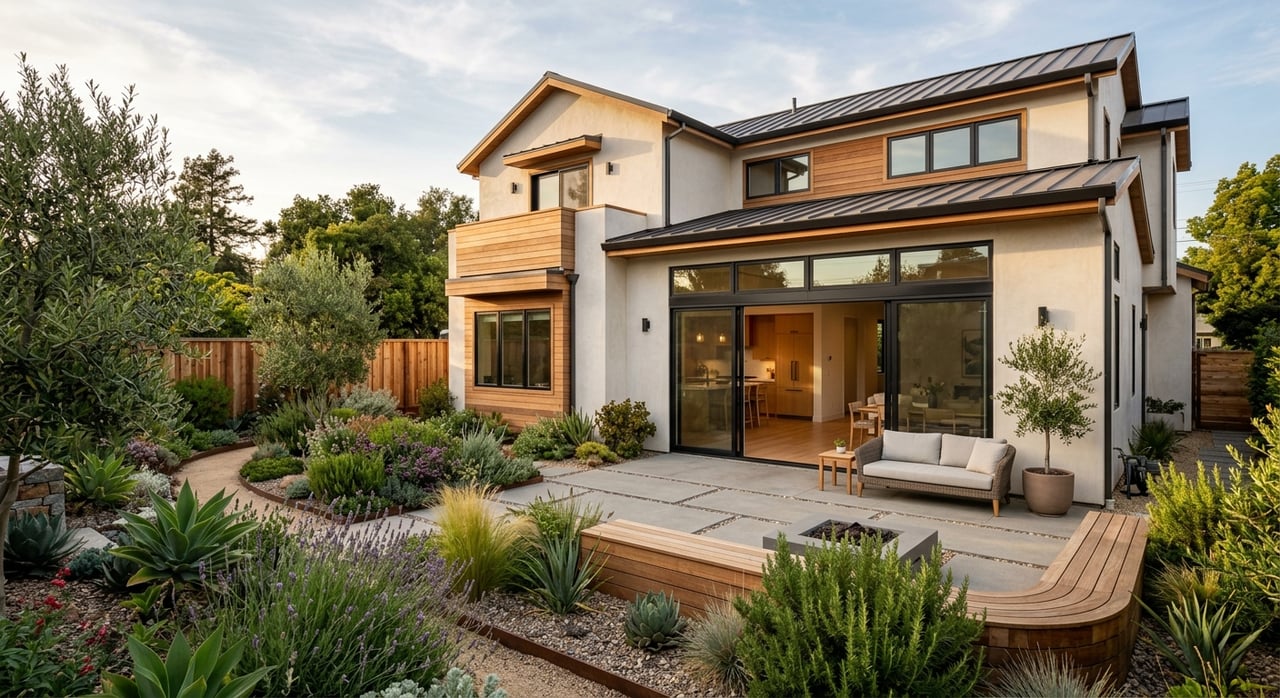
Berkeley vs Oakland Housing for Your Next Move-Up
May 28, 2026
May 28, 2026
Trying to choose between Berkeley and Oakland for your next home? If you are a move-up buyer looking for more space, a better daily layout, or a neighborhood that fits this next chapter, the decision can feel both exciting and complicated. The good news is that both cities offer real options for buyers who want 3+ bedrooms, but they differ in price, housing mix, and day-to-day feel in ways that matter. Let’s dive in.
For move-up buyers, the biggest difference between Berkeley and Oakland is price. As of March 2026, Berkeley’s median sale price across all home types was $1.55 million, while Oakland’s was $870,000. That gap alone changes what many buyers can realistically target.
If your search is focused on detached homes, the comparison is still wide. Berkeley’s December 2025 median single-family sale price was $1.265 million, compared with Oakland’s $700,000. In simple terms, Oakland gives you more house for the money based on current city figures.
That said, it is important to compare like with like. Citywide medians across all home types can look very different from detached-home numbers, especially in places with a strong mix of condos, multifamily buildings, and older housing stock. If you are a move-up buyer shopping for a 3 to 4 bedroom single-family home, the detached-home comparison is often the more useful lens.
Price is only part of the story. Competition affects how fast you need to move, how aggressive your offer may need to be, and how flexible you may need to stay during your search.
As of March 2026, Berkeley was the more competitive market overall. Homes there averaged 6 offers, sold in about 15 days, and closed at 127.2% of list price. Oakland homes also sold in about 15 days, but averaged 4 offers and closed at 113.3% of list price.
For you as a buyer, that often means Berkeley may require a sharper strategy from day one. Oakland can still be competitive, but the numbers suggest you may have a bit more room on pricing and fewer bidding situations on average.
Move-up buyers are often focused on practical needs: more bedrooms, a second living area, a better work-from-home setup, or a yard that feels usable. Both Berkeley and Oakland can meet those needs, but the value equation is different.
Berkeley reports that 65% of owner-occupied homes have three bedrooms or more. Oakland is close behind, with 62% of owner-occupied homes in that size range. So if your main goal is a 3+ bedroom owner-occupied home, both cities have meaningful inventory that can fit that need.
The bigger question is usually what that space costs and what form it takes. In Berkeley, higher prices may mean you trade lot size, expansion potential, or house size for location and access. In Oakland, the same budget may open the door to a larger detached home or more property options depending on the neighborhood.
If you care about architecture, block feel, and how a neighborhood is likely to evolve, housing stock matters. Berkeley and Oakland each offer a mix of detached homes and multifamily buildings, but the mix plays out differently on the ground.
In Berkeley’s 2020 housing stock, 41% was detached single-family, 4% was attached single-family, 20% was in 2 to 4 unit properties, and 35% was in 5+ unit buildings. The city’s 2025 housing pipeline is concentrated in multifamily and mixed-use projects near transit corridors and UC Berkeley. Berkeley’s Middle Housing rules, effective November 1, 2025, also apply to most residential neighborhoods outside the hills and are intended to add 2 to 6 unit options near transit, jobs, parks, schools, and groceries.
Oakland’s 2016 to 2020 housing mix was 42% detached, 5% attached, 18% in 2 to 4 units, 14% in 5 to 19 units, and 22% in 20+ unit buildings. Overall, that means 47% single-unit and 52% multi-unit. Oakland also reports that 80.4% of its housing stock was built before 1980, 8.0% since 2000, and 1.8% since 2010.
For move-up buyers, this means both cities have older housing stock and both include a meaningful share of detached homes. Berkeley may feel more structured around transit corridors and planned growth areas, while Oakland tends to offer a broader range of built forms from one neighborhood to the next.
Many buyers ask which city offers larger lots or a more spacious feel. In practice, this is less of a citywide question and more of a neighborhood question.
Berkeley’s updated rules now cover most residential lots outside the hills, while Oakland includes a wide range of detached house areas, 2 to 4 unit blocks, larger apartment districts, and preservation areas. So instead of assuming one city always feels roomier, it is smarter to compare specific neighborhoods and block patterns.
That is especially true if your move-up goal includes outdoor space, future flexibility, or a quieter residential setting. Two homes with the same bedroom count can live very differently depending on parcel shape, nearby building pattern, and how the street itself feels day to day.
If you want a city that reads as more uniform in character, Berkeley may appeal to you. Its Downtown Area Plan emphasizes a pedestrian-friendly, transit-oriented pattern while preserving historic resources. The city also notes that downtown Berkeley remains one of the few substantially intact pre-World War II downtowns of its size, with street-facing commercial buildings and a traditional human scale.
Berkeley’s planning materials also describe an emphasis on protecting distinctive neighborhoods, vibrant commercial areas, and the city’s unique character. For a buyer, that can translate into a stronger sense of continuity between planning goals, architecture, and commercial corridors.
This does not mean every part of Berkeley feels the same. It means the city often comes across as more tightly framed in how it balances growth, preservation, and neighborhood form.
Oakland tends to feel more district-driven and more varied block by block. The city has nine designated preservation districts with about 1,500 buildings, including Preservation Park, Old Oakland-Victorian Row, Bellevue-Staten, Oak Center, and the 7th Street Commercial District.
Oakland also has official cultural districts such as the Black Arts Movement and Business District, the Latinx Cultural Arts District in Fruitvale, and the Lakeshore LGBTQ Cultural District. For buyers, this reinforces the idea that neighborhood identity in Oakland can shift quickly from one area to another.
That variety can be a major plus if you want more options in housing style, street feel, and local amenities. It also means your search benefits from being very specific about what kind of daily environment you want, because Oakland rarely feels one-note.
For many move-up buyers, commute planning is not just about getting to work. It is about school drop-offs, family logistics, transit backups, and how flexible your week feels when plans change.
Berkeley’s transit pattern is centered mainly on AC Transit and BART. The city is also working on access around Ashby, North Berkeley, and El Cerrito BART stations, and BART offers indoor bike stations at Downtown Berkeley and Ashby. This creates a commute profile that feels strongly bus-and-BART oriented, with bike access built into the mix.
Oakland also includes AC Transit and BART, but adds SF Bay Ferry as part of the city’s stated commute options. The city recommends checking whether your destination is near an AC Transit stop, BART station, or ferry route. Oakland also has bike stations serving Fruitvale, 19th Street, and MacArthur BART, with one planned for Rockridge.
If you want more commute-mode redundancy, Oakland has the edge. If you want a transit-first setup built largely around BART and bus access, Berkeley may feel more straightforward.
If your top priority is stretching your budget into more house, Oakland is the clear value play based on current citywide and detached-home median prices. You may be able to target more square footage, a larger lot, or a detached home with features that would cost significantly more in Berkeley.
If your top priority is a more consistently framed urban experience with strong transit orientation and a more uniform historic feel, Berkeley may be the better match. Buyers who value that blend of preservation, walkability, and design continuity often find Berkeley worth the premium.
If you are choosing between the two, it helps to focus on three questions:
For most move-up buyers, the answer is not just Berkeley or Oakland. It is which specific neighborhood, block, and home type best support your next phase of life.
If you want help comparing homes, neighborhoods, and budget scenarios across both cities, Diana Sweet offers thoughtful, data-driven guidance tailored to how you actually live.
Stay up to date on the latest real estate trends.
Whether you are a first-time homebuyer or upgrading or downgrading and need to sell, there are always questions and concerns. I want to answer your questions and make sure you know that we can accomplish your needs and desires. Where there is a will there is a way. I look forward to working with you.