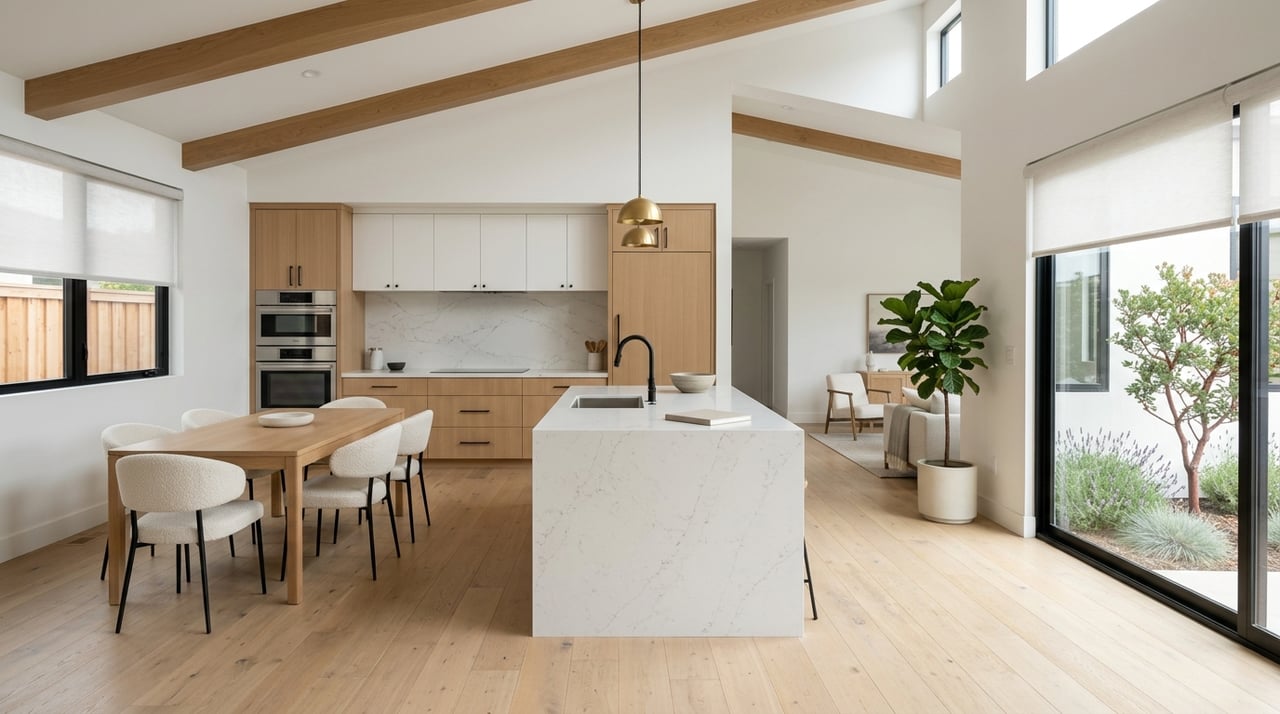
How To Price And Position Your Berkeley Home To Sell
June 11, 2026
June 11, 2026
Wondering why one Berkeley home sparks multiple offers while another sits, even when they look similar on paper? In this market, pricing and positioning are not separate decisions. They work together to shape how buyers see value from the moment your home hits the market. If you want to sell with confidence, it helps to understand what Berkeley buyers respond to, how local data should guide your list price, and which details can strengthen your launch. Let’s dive in.
If you are selling in Berkeley, the first step is to resist using one headline number as your pricing answer. Recent data points show a range, not a single truth. The City of Berkeley’s 2025 dashboard placed the December 2025 single-family median sale price at $1.265 million, while Redfin reported about $1.44 million for the three months ending April 2026 and Zillow reported a $1.361 million median sale price with a $1.451 million typical home value through April 2026.
That spread matters because each source measures the market differently. Citywide figures can help you understand the backdrop, but they do not price your specific home. In Berkeley, two homes a few blocks apart can land very differently based on condition, lot, layout, permit history, and even address-specific city factors.
The most useful pricing strategy usually starts with the nearest recent solds and pendings that truly match your home. That means looking closely at homes with similar square footage, lot size, condition, architectural style, and level of updating. It also means paying attention to what buyers are choosing right now, not just what sold three or six months ago.
Berkeley’s official parcel tools reinforce how property-specific this process can be. By address, you can review zoning, permit history, historic-resource status, fire district, seismic information, and creek-ordinance applicability. These details can affect buyer confidence, future plans for the property, and ultimately price.
Even with softer pricing than the market peak, Berkeley is still moving quickly. Redfin reports homes receiving six offers on average and selling in around 15 days. Zillow also reports about 15 days to pending, with 77.6% of sales over list price.
That does not mean every home should be priced aggressively low. It means buyers are still active when a home feels well-prepared and clearly positioned. The right strategy depends on your home’s condition, competition, and the strength of the most relevant comps.
Price gets buyers in the door. Positioning helps them feel that your home is worth pursuing. In Berkeley, that often comes down to how clearly your home communicates condition, care, and livability.
According to Redfin’s 2026 spring selling guide, buyers first notice overall condition, then cleanliness and layout. Buyers also strongly prefer move-in ready homes with no major repairs and updated systems. For sellers, that means presentation is not cosmetic fluff. It is part of the value story.
The highest-impact prep items are often straightforward:
These updates help buyers focus on the home itself instead of the work they think they will need to do. In a market where homes move fast, reducing hesitation matters.
If your home has major improvements, make sure they are easy for buyers to understand. Redfin notes that kitchen, roof, and bathroom improvements stand out, along with updated electrical, plumbing, and HVAC systems.
In Berkeley, practical features can also help your listing stand out. Redfin’s local trend data points to features like tankless water heaters, driveways, breakfast nooks, workshops, and pantries. These details may not define the price on their own, but they can strengthen buyer interest when presented clearly.
Berkeley’s housing stock has character, and that is often a major advantage. Older homes, architecturally distinctive homes, and properties with preserved period details can attract buyers who are looking for something more specific than a generic move-in-ready house.
That said, character alone is not enough. Buyers also want clarity. If your home has historic designation, unusual features, older upgrades, or a custom layout, your marketing should explain those details in a way that makes the home feel special and understandable rather than uncertain.
Some Berkeley properties are City Landmarks, Structures of Merit, or located within Historic Districts. For these homes, exterior alterations require a Structural Alteration Permit before building-permit review, and complete applications are typically processed in 3 to 12 months.
For a seller, this does not automatically reduce value. In many cases, preserved character and permit-ready improvements can be a selling point. The key is to present the home honestly and organize the information so buyers can appreciate both the charm and the practical realities.
In Berkeley, paperwork is not just an escrow task. It is part of how you support your asking price. Buyers can verify permit history online, and the city’s research tools go back to 1991.
That means missing documentation can raise questions early. Clear records can do the opposite. When available, permits, contractor invoices, inspection sign-offs, and explanations for older work help buyers understand what was done and how to evaluate it.
California’s seller disclosure framework has a direct connection to pricing strategy. Most 1-to-4-unit residential transfers require a Real Estate Transfer Disclosure Statement and a Natural Hazard Disclosure. The TDS asks about issues such as unpermitted additions or structural modifications, code compliance, drainage problems, major damage, zoning violations, nuisances, and lawsuits.
If a home has unresolved questions in these areas, buyers may discount for risk even if they love the property. If the information is well-documented and communicated clearly, you are in a much better position to justify your price and avoid surprises during escrow.
For homes built before 1978, lead-based paint disclosure rules also apply before sale. For many Berkeley homes, that makes a complete disclosure package an important part of a thoughtful launch.
A strong sale is not just about the headline price. It is also about what you keep. In Berkeley, transfer taxes can significantly affect seller net proceeds.
Alameda County charges $0.55 per $500 of value. On top of that, the City of Berkeley’s transfer tax is 1.5% up to $1.7 million and 2.5% above that, in addition to the county tax. The city’s own example shows that a $2 million sale would owe $50,000 in city transfer tax alone, before the county tax.
City voters approved Measure W in November 2024, and Berkeley states that the new tiered transfer-tax rates take effect on January 1, 2027. If your planned sale may close later, it is worth re-checking the current transfer-tax schedule before you set expectations around net proceeds.
This is also where pricing strategy becomes more nuanced. A higher sale price is always attractive, but only if it is realistic and does not cost you momentum. Sometimes the better outcome comes from a launch strategy that creates strong competition and cleaner terms rather than simply starting high.
Berkeley offers a transfer-tax rebate for qualifying voluntary seismic work completed before or within one year of sale, up to one-third of the city’s base 1.5% transfer tax. If you have completed seismic upgrades, that documentation may help both your marketing and your final net proceeds.
For some buyers, seismic improvements are a meaningful practical benefit. For sellers, they can become part of a stronger pricing and positioning story when properly documented.
Many sellers ask about the best week or month to list. Redfin’s spring 2026 guide says spring is the busy season and that homes tend to sell fastest between late March and April. That is useful context, but timing should support readiness, not replace it.
In Berkeley, where homes can still move quickly, the best launch window is often the one where your home is fully prepped, priced from recent comps, and ready to show well immediately. A rushed listing can cost you more than waiting a few extra weeks to finish paint, organize disclosures, or improve presentation.
Before your home goes live, focus on these key steps:
The best pricing strategy for your Berkeley home is not about picking a number in isolation. It is about creating a credible, attractive package that helps buyers understand the value quickly and act with confidence.
When pricing is grounded in the right comps and positioning is supported by presentation, documentation, and local market awareness, your home has a much better chance of standing out. In a market as nuanced as Berkeley, that combination can make all the difference.
If you are thinking about selling and want a methodical, design-aware strategy for pricing, preparation, and launch, Diana Sweet can help you evaluate your home with a local, data-driven approach.
Stay up to date on the latest real estate trends.





Whether you are a first-time homebuyer or upgrading or downgrading and need to sell, there are always questions and concerns. I want to answer your questions and make sure you know that we can accomplish your needs and desires. Where there is a will there is a way. I look forward to working with you.