El Cerrito vs Berkeley Homes: What Buyers Should Know
May 14, 2026
May 14, 2026
If Berkeley is on your radar but the price tag or competition gives you pause, El Cerrito may deserve a closer look. Many buyers want East Bay access, good transit options, and a home that fits daily life without stretching every part of the budget. The good news is that El Cerrito and Berkeley offer some overlapping advantages, but they feel different in ways that matter once you start touring homes. Let’s dive in.
If your search starts with budget, the gap between these two cities is hard to ignore. In March 2026, Berkeley’s median sale price was $1.55 million, while El Cerrito’s was $885,000. That puts El Cerrito about $665,000 lower, or roughly 43% below Berkeley.
That price difference can change the kind of home you target. For many buyers, it may mean a better shot at a single-family home, more interior space, or a different balance between location and home features. If you are trying to stay in the East Bay while keeping options open, El Cerrito can create breathing room.
Price is only part of the story. The pace of the market also shapes your experience as a buyer and how quickly you may need to act.
In March 2026, Berkeley homes sold in about 15 days on average and received around 6 offers. El Cerrito homes sold in about 50 days that same month. That said, El Cerrito’s number came from only 3 closed sales, so it should be viewed as a small-sample snapshot rather than a fixed citywide pattern.
Still, the comparison points to a practical takeaway. Berkeley tends to be more competitive, while El Cerrito may offer a little more room to evaluate tradeoffs, due diligence, and timing. If you want a less pressured search, that can be meaningful.
Berkeley often feels more historically layered. The city has a formal Landmarks Preservation Commission and a preservation framework for landmarks, historic districts, and structures of merit. City materials reference a broad mix of styles, including brown-shingle or First Bay Tradition, Craftsman, Arts and Crafts, Victorian and Queen Anne, plus later Revival-era homes.
For buyers who care about design, that variety is part of Berkeley’s appeal. Streetscapes can shift noticeably from block to block, and the housing stock often reflects a longer architectural timeline. If character and historic detail are high on your list, Berkeley may feel more compelling.
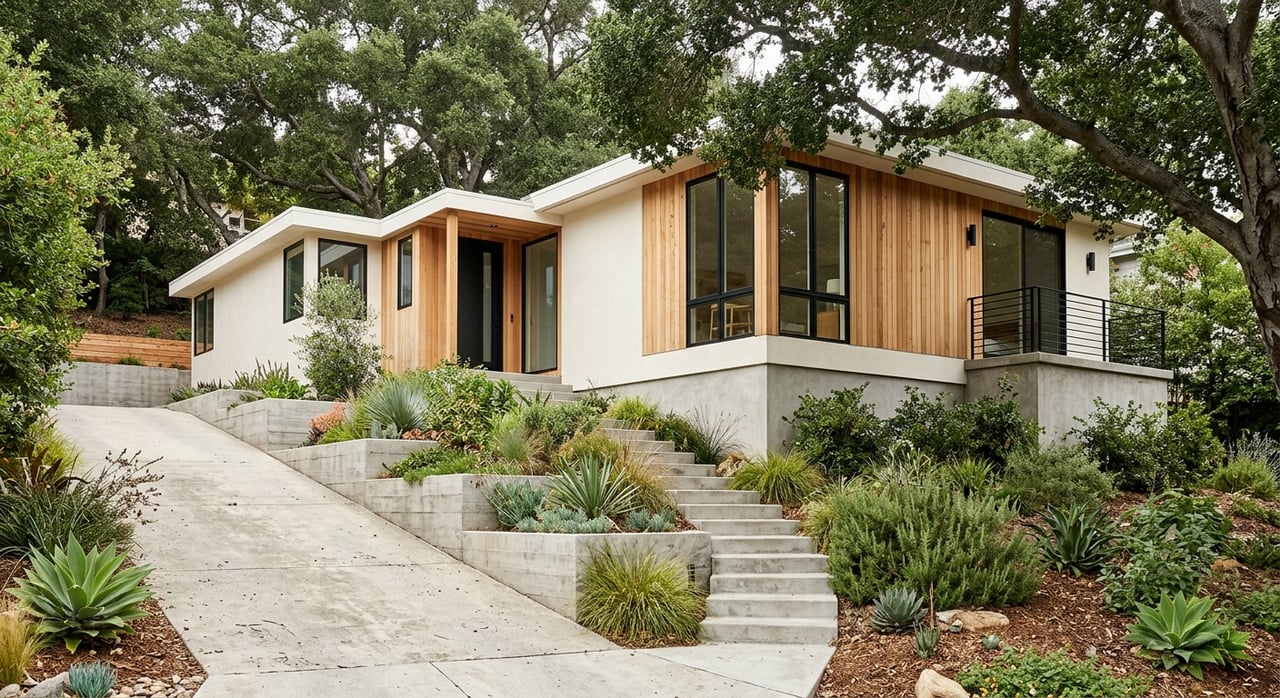
El Cerrito has a different residential story. The city’s General Plan describes it as a “City of Homes,” with single-family residences extending into the hills, smaller homes closer to San Pablo Avenue, and higher-intensity housing nearer San Pablo and the BART tracks.
The city’s history also points to rapid growth during World War II and the post-war housing boom. That helps explain why El Cerrito often reads as more post-war in character. For some buyers, that means a simpler, more uniform residential feel. For others, it means a practical housing stock with clear neighborhood patterns.
One of the biggest lifestyle questions in both cities is whether you want to live in the hills or in flatter, more transit-oriented areas. The tradeoff looks different depending on which city you choose.
In Berkeley, hillside living is tied not only to views and topography but also to hazard considerations. The city notes that its Middle Housing rules do not apply in the Berkeley Hills high fire hazard areas. Berkeley also provides fire-weather guidance telling hill residents to leave before extreme fire weather, and its GIS tools map landslide zones, wildfire history, fire hazard zones, and evacuation zones.
That does not mean hillside Berkeley is off the table. It does mean buyers should evaluate the location carefully and understand the added planning that may come with it. If you are considering the hills, you want a clear picture of both the setting and the practical realities.
In El Cerrito, the hillside story is more centered on views, open space, and a different residential pattern. The Hillside Natural Area includes 107 acres of trails and open space. The hillside districts feature curving roads, larger and newer homes, landscaping, and broad Bay views.
That gives hillside El Cerrito a distinct feel compared with the flatter parts of the city. If you want a quieter residential setting with a more elevated outlook, the hills may be where your search starts.
The flatter grid east of San Pablo Avenue and BART has its own appeal. According to the city, these areas are quieter, have smaller lots, and feel more urban-transit oriented. If walkability to daily errands or easier station access matters to you, that part of El Cerrito can be especially practical.
For many buyers, this creates a clearer lifestyle split than in Berkeley. In El Cerrito, the difference between hillside living and flatter neighborhood living can feel more straightforward when you are narrowing your priorities.
If your daily routine includes BART or bus service, both cities offer useful options. The details matter, though, especially if you also own a car or want easier station access.
Berkeley’s public transit system is centered on AC Transit and BART, and the city is actively improving bus lanes, shelters, crossings, and bike lanes that connect to stations. For this comparison, the main BART stations are Downtown Berkeley, North Berkeley, and Ashby.
Each station has a different context. Downtown Berkeley sits close to UC Berkeley and a dense mix of shops, restaurants, theaters, and other attractions, but it does not have station parking. North Berkeley has parking and easy access to the Ohlone Greenway, while Ashby serves southern Berkeley and hosts the Berkeley Flea Market on weekends.
El Cerrito has two BART stations, El Cerrito Plaza and El Cerrito del Norte, along with numerous AC Transit bus lines. Plaza serves southern El Cerrito, northern Albany, Kensington, and nearby Berkeley and Richmond areas. Del Norte serves northern El Cerrito and connects to several regional bus agencies.
The city also has a BART Path that gives non-motorized access to both stations, the library, the senior center, Albany, and Berkeley. For buyers who want transit access without giving up neighborhood scale, this can be a strong point in El Cerrito’s favor.
This is a detail buyers sometimes overlook until after move-in. El Cerrito has a residential parking program around station areas, which can be important if you commute by BART but keep one or more cars. In Berkeley, station-area conditions vary by location, and Downtown Berkeley in particular does not offer station parking.
There is also a forward-looking factor to keep in mind. BART and partner cities are advancing a corridor access plan tied to transit-oriented development around Ashby, North Berkeley, and El Cerrito Plaza, with more than 2,000 mixed-income homes planned near those stations. Over time, station-area circulation and parking patterns may continue to change.
Many buyers are not just choosing a city. They are choosing how errands, transit, dining, and daily routines fit together week after week.
Berkeley’s convenience pattern is more distributed. City materials identify areas like Downtown, Elmwood, Fourth Street, North Shattuck, Solano, Telegraph, Lorin, West Berkeley, San Pablo, and University Avenue as places already close to jobs, parks, grocery stores, and other amenities.
That gives Berkeley a more urban texture. Instead of one main commercial focus, you get multiple nodes with their own rhythm. If you like having many different districts to choose from, Berkeley may offer more variety in daily life.
El Cerrito’s convenience pattern is more concentrated around San Pablo Avenue and the Plaza. The city describes the Plaza area as a high-activity node with a regional shopping center, the historic building that houses the Cerrito Theatre, local shops and restaurants, and a Main Street feel along Fairmount Avenue.
Its General Plan also identifies the Plaza, Del Norte, and Midtown as pedestrian-friendly mixed-use villages. If you like the idea of a smaller city with a few clearly defined hubs, El Cerrito may feel easier to learn and navigate.
If you are comparing El Cerrito with Berkeley, the right answer depends on what tradeoffs you are willing to make. El Cerrito appears to offer a lower-cost path into the East Bay, strong transit access, and a more neighborhood-scale feel. Berkeley commands a premium for architectural range, a denser amenity network, and a faster-moving market.
For some buyers, Berkeley is still the clear fit because of its housing character and broader mix of commercial districts. For others, El Cerrito offers a more practical balance of price, commute access, and day-to-day livability. The key is to compare not just city names, but the kind of week-to-week life each location supports.
If you want help comparing specific blocks, home styles, or commute patterns in Berkeley and El Cerrito, Diana Sweet can help you narrow the search with a thoughtful, data-driven approach.
Stay up to date on the latest real estate trends.
Whether you are a first-time homebuyer or upgrading or downgrading and need to sell, there are always questions and concerns. I want to answer your questions and make sure you know that we can accomplish your needs and desires. Where there is a will there is a way. I look forward to working with you.