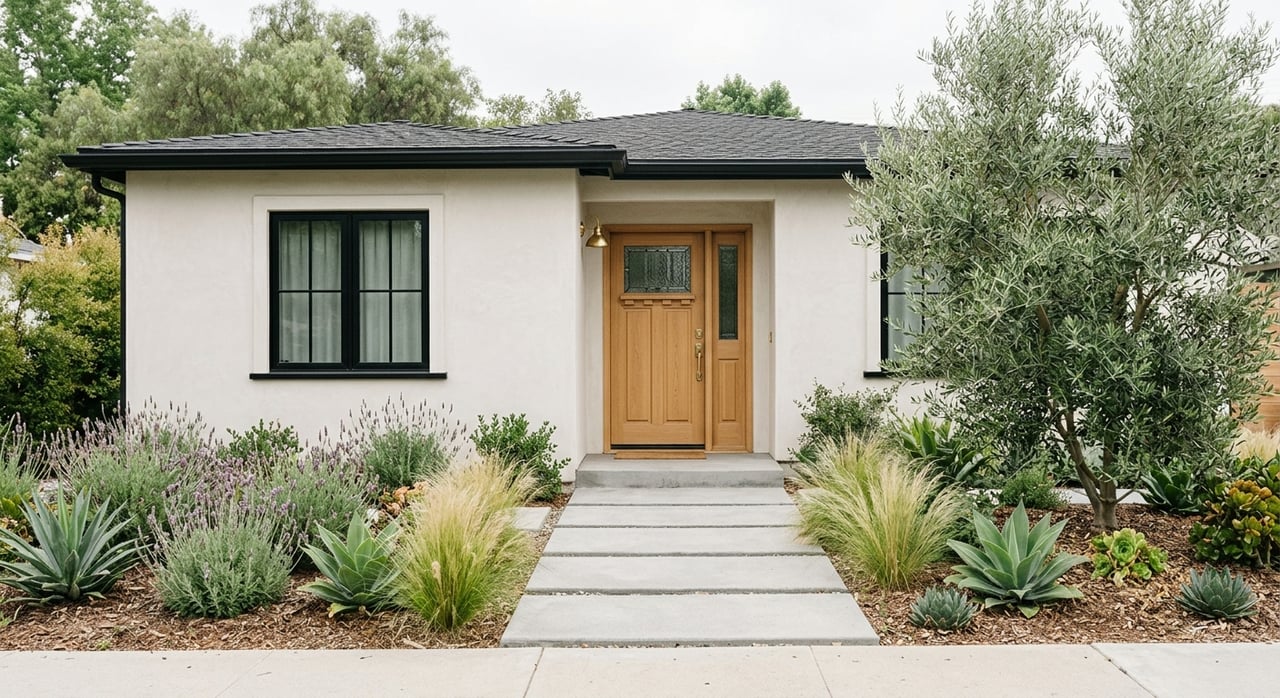
Your Albany CA First-Time Homebuyer Guide
May 21, 2026
May 21, 2026
Buying your first home in Albany can feel exciting and overwhelming at the same time. You are trying to balance budget, commute, condition, and long-term fit, all in a small East Bay market where homes can move quickly and listing language does not always tell the full story. The good news is that with the right local context, Albany becomes much easier to understand. Let’s dive in.
Albany is a compact East Bay city on the eastern shore of San Francisco Bay, bordered by Berkeley, El Cerrito, Richmond, and the Bay. The city describes itself as a small-town community with a pedestrian-friendly main street on Solano Avenue, plus shoreline recreation connected to the Bay Trail and East Shore State Park.
For many first-time buyers, Albany sits in an appealing middle ground. Its 2024 population estimate is 19,439, and the median owner-occupied home value is $1,202,200. Compared with nearby cities, that places Albany below Berkeley’s median owner-occupied value of $1,413,900, above Oakland’s $929,900, close to Alameda’s $1,235,700, and slightly above El Cerrito’s $1,124,400.
That pricing context matters. If you want Berkeley-adjacent access and a smaller city feel, Albany can offer a meaningful alternative without feeling like a completely different market.
Albany’s housing stock is older, and that shapes both the charm and the homework that comes with buying here. More than half of the city’s housing stock is over 60 years old, and in the area east of Masonic Avenue, more than 90% of the housing was built before 1940.
In practical terms, you may see a lot of older single-family homes with original details, updated systems, or renovation history that needs careful review. You may also come across townhome-style options, small multifamily properties, flats, and 2 to 4 unit buildings in higher-density areas.
If you are buying your first home, this is where a methodical mindset helps. Older homes can be wonderful, but they often require closer attention to permits, improvements, and future maintenance.
Albany listing language often reflects the city’s age and housing mix. Learning how to read those clues can help you spot both opportunity and risk.
When a listing highlights “original,” “period details,” or “charm,” it often points to Albany’s older pre-1940 housing stock. That can mean appealing architectural character, but it can also mean older systems, past alterations, or deferred upkeep.
This does not mean the property is a problem. It means you should look carefully at disclosures, inspection findings, and any records tied to upgrades or repairs.
Albany’s housing analysis notes that structural improvements, remodels, and additions are common in the city’s older homes. So when a listing says “updated,” “expanded,” or “full of potential,” it is smart to verify what work was actually done and whether permits were obtained where required.
For a first-time buyer, this step is easy to overlook. But it can make a big difference in your confidence about condition, value, and future resale.
If a listing mentions an ADU, JADU, in-law unit, separate entrance, or rental potential, pause and confirm the details. Albany says ADUs and JADUs must have a separate entrance, separate address, and separate mailbox, and ADUs require a building permit.
The city also states that ADUs and JADUs cannot be sold separately from the primary dwelling. In addition, they may not be rented for less than 30 days. Albany also has an amnesty program that can help legalize certain unpermitted ADUs or JADUs built before January 1, 2020.
If a property includes any secondary living space, one of your key questions should be simple: Is the unit properly permitted?
Some buyers look at Albany with an eye toward future changes, especially in older homes. If a listing suggests room to expand, it is worth checking Albany’s design review process early.
The city says design review is intended to make sure projects are visually and functionally appropriate to their sites and surroundings. It also notes that planning review is separate from the building permit process, so future work may involve more than one approval path.
One of the biggest first-time buyer mistakes is focusing only on the down payment. A better framework is to think in four parts:
That full picture gives you a more realistic sense of what you can comfortably afford.
A useful planning rule is that closing costs, not including your down payment, typically run about 2% to 5% of the purchase price. The exact amount depends on factors like the home price, your loan type, lender costs, down payment, and location.
You should also reserve money for moving expenses, furniture, immediate repairs, and other first-month costs. That extra cushion can make your first few months of ownership much less stressful.
Your monthly payment is not just principal and interest. The Census Bureau’s selected monthly owner costs measure includes mortgage payments, real estate taxes, fire, hazard, or flood insurance, utilities, fuels, and in some cases HOA or condo fees.
In Albany, the median selected monthly owner cost is $3,965 with a mortgage and $1,247 without one. While your own numbers may differ, this is a useful all-in benchmark when you are building your budget.
In Alameda County, property tax calculations include the 1% general levy plus applicable voter-approved debt service rates and special assessments. The county also notes that supplemental tax bills can follow a change in ownership or new construction.
For you as a buyer, that means the tax line on a closing estimate may not be as simple as applying a flat percentage. It is worth reviewing the property-specific details carefully so there are fewer surprises after closing.
If cash to close is your biggest obstacle, California does offer first-time buyer assistance options. CalHFA’s MyHome program provides deferred-payment junior loans of up to 3.5% of the purchase price or appraised value for FHA loans, and up to 3% for conventional loans, to help with down payment and or closing costs.
CalHFA also requires homebuyer education for first-time buyers using its programs. If you are exploring assistance, it helps to understand those requirements early in your planning process.
Albany makes the most sense when you compare it with the places around it. Many buyers looking here are also considering Berkeley, Oakland, El Cerrito, or Alameda.
Albany’s median owner-occupied home value sits below Berkeley’s and above Oakland’s, while landing near Alameda and a bit above El Cerrito. That gives Albany a distinctive position for buyers who want East Bay access, a smaller-city setting, and pricing that may feel more approachable than Berkeley.
This does not mean Albany is inexpensive. It does mean it offers a different balance of scale, location, and housing type than some nearby options.
Albany does not have its own BART station, but local transit connections are an important part of the picture. The city says bus routes connect to El Cerrito Plaza and North Berkeley BART.
Albany’s general plan notes that AC Transit Route 18 on Solano Avenue connects Albany to Downtown Berkeley and Downtown Oakland. Route 72 Rapid on San Pablo Avenue runs through Oakland, Berkeley, Albany, El Cerrito, and Richmond, while Route 25 loops from El Cerrito Plaza to Downtown Berkeley through Albany. The city also says nearly all residents live within 800 feet of a bus stop.
If commute flexibility matters to you, Albany is worth evaluating as a transit-linked city rather than assuming you must rely only on a car.
Albany’s median selected monthly owner cost with a mortgage is $3,965. That is similar to Alameda’s $3,933, below Berkeley’s and El Cerrito’s figures above $4,000, and above Oakland’s $3,684.
For a first-time buyer, this can help frame your tradeoffs more clearly. A lower purchase price in one city does not always mean the same monthly ownership experience, and a higher-value city may not line up with your budget or lifestyle goals.
When you are evaluating a home in Albany, keep these questions front and center:
These questions may seem basic, but they can help you make a more confident and informed decision.
First-time buying in Albany is not just about getting pre-approved and touring homes. It is about understanding how an older housing stock, local permitting rules, all-in ownership costs, and East Bay location tradeoffs come together in one small market.
That is where thoughtful guidance can make a real difference. A calm, data-driven approach helps you separate what is cosmetic from what is costly, and what sounds attractive in a listing from what truly fits your goals.
If you are starting your search in Albany, Diana Sweet offers personalized guidance grounded in local knowledge, careful analysis, and a clear understanding of how East Bay neighborhoods shape daily life.
Stay up to date on the latest real estate trends.
Whether you are a first-time homebuyer or upgrading or downgrading and need to sell, there are always questions and concerns. I want to answer your questions and make sure you know that we can accomplish your needs and desires. Where there is a will there is a way. I look forward to working with you.