
Marin County vs East Bay Housing and Lifestyle Guide
May 7, 2026
May 7, 2026
Wondering whether Marin or the East Bay fits your next move? It is a common Bay Area question because both offer strong lifestyle appeal, but they feel very different once you look past the map. If you are weighing price, home style, commute patterns, and day-to-day rhythm, this guide will help you compare the tradeoffs with more clarity. Let’s dive in.
If you compare Marin County and the inner East Bay as broad regions, Marin generally comes in at a higher price point and offers more detached housing. In February 2026, Marin County’s median sale price was $1.4 million, while Alameda County was about $1,022,438 and Contra Costa County was $779,750.
Inventory also differs by county, though these numbers are best read as directional rather than perfectly apples to apples because public sources use slightly different reporting windows. Marin had 452 homes in inventory with 2.5 months of supply, while Alameda had 1,830 homes with 2.3 months of supply and Contra Costa had 1,883 homes with 2.4 months of supply.
That said, countywide numbers only tell part of the story. If you are actually choosing where to live, the more useful comparison is often city by city or even neighborhood by neighborhood.
One of the biggest mistakes buyers make is assuming Marin is always more expensive than the East Bay. The data shows that is not always true.
In Marin, March 2026 median sale prices ranged from $921,000 in Marin City to $1.1 million in San Rafael and $2.4 million in Mill Valley. In the inner East Bay, the range also varies a lot, from $729,000 in Oakland and $885,000 in El Cerrito to $1.3 million in Albany and $1.6 million in Berkeley.
That means some East Bay markets are priced above parts of Marin, while other East Bay areas remain below them. If your budget is fixed, the right question is usually not “Marin or East Bay?” but “Which specific submarkets match my goals?”
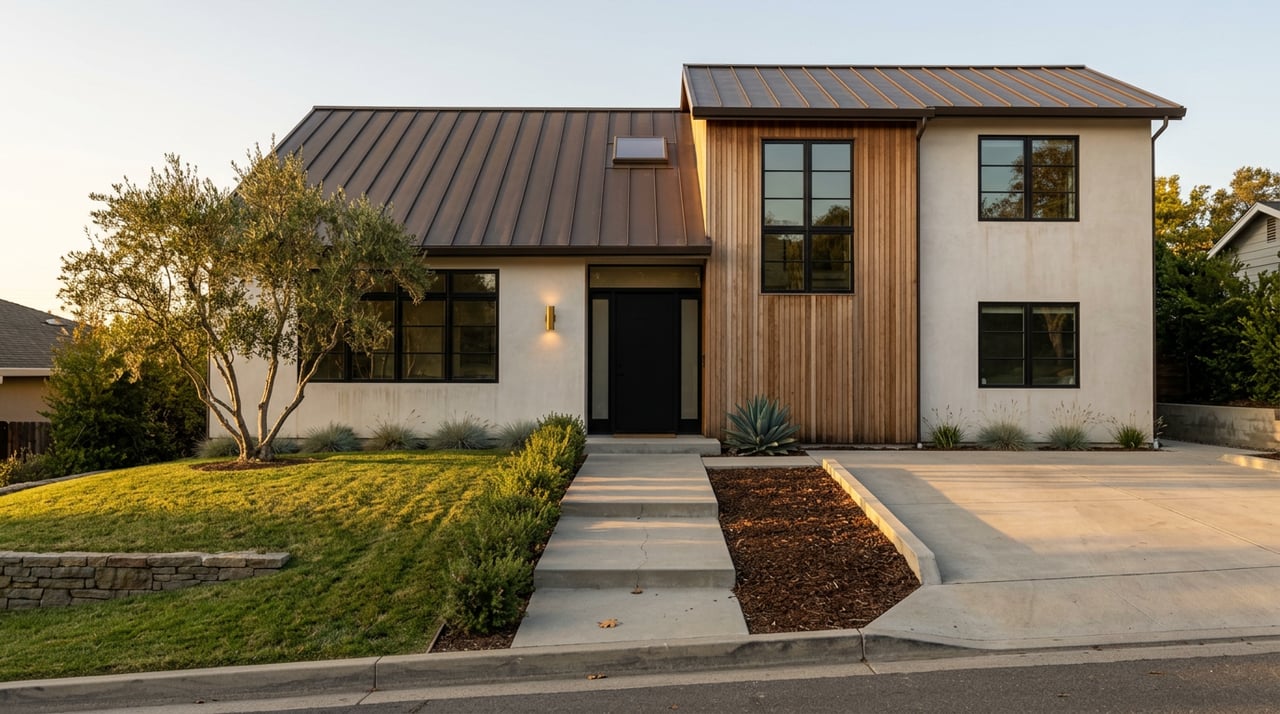
If you picture a classic detached home with more separation from neighboring properties, Marin may feel more aligned with that vision. Marin County’s consolidated plan reports that 63% of housing units are single-family homes and 64% are owner-occupied.
San Rafael reflects that pattern. City housing data shows 11,280 detached units compared with 9,238 multifamily units in buildings with five or more units.
Another useful detail is the age of the housing stock. About 78% of Marin homes were built before 1980, which can shape both architectural character and the type of updates a buyer may want to plan for over time.
The inner East Bay tends to offer a broader mix of housing types. That can be helpful if you want more flexibility in price point, lot size, or proximity to neighborhood commercial areas and transit.
Berkeley is a good example of that variety. Its housing element lists 20,924 detached single-family units out of 51,523 total units, pointing to a more mixed housing stock than Marin even before recent zoning changes.
Berkeley also adopted Middle Housing zoning changes effective November 1, 2025, allowing duplexes, triplexes, fourplexes, courtyard apartments, and other small-scale multifamily types in low-density neighborhoods. For buyers, that supports the idea that parts of the East Bay may continue to offer a wider range of home formats over time.
El Cerrito adds another layer to the comparison. Its 2020 housing stock was 68.1% single-family detached homes, showing that the East Bay is not uniformly apartment-heavy.
Transportation is one of the clearest lifestyle differences between Marin and the inner East Bay. Even when commute times look similar on paper, the daily experience can feel very different.
In Marin, many commuters rely on a mix of cars, ferries, and SMART rail. Golden Gate Ferry runs daily service between Sausalito, Tiburon, and Larkspur in Marin County and San Francisco, while SMART provides passenger rail service in Marin and Sonoma counties with two stations in San Rafael.
In practice, that often creates a more schedule-based commute. Your routine may depend on coordinating driving, parking, ferry timing, or rail-to-ferry connections.
The inner East Bay is generally more rail- and bus-centered. BART serves stations including Downtown Berkeley, North Berkeley, Ashby, 12th Street Oakland City Center, 19th Street Oakland, West Oakland, El Cerrito del Norte, El Cerrito Plaza, and Richmond, and AC Transit is deeply woven into many East Bay neighborhoods.
For many buyers, the real decision comes down to how you want everyday life to feel. This is where Marin and the inner East Bay often diverge the most.
Marin’s rhythm is closely tied to open space and waterfront access. The Marin County Open Space District manages 34 preserves and about 18,500 acres, including trails, redwood groves, scenic vistas, and waterfalls.
That does not mean every part of Marin feels the same, but the county’s physical landscape has a strong influence on daily life. If you value outdoor access and a setting with less day-to-day urban intensity, Marin may feel like a natural fit.
The inner East Bay often feels more street-facing and mixed-use. Berkeley’s neighborhood descriptions highlight Downtown Berkeley as a vibrant urban hub, Telegraph Avenue as a historic commercial district, and the Lorin District as an artistic and transit-accessible area.
This can appeal to buyers who want neighborhood activity woven into their routine. If you enjoy being close to transit, shops, restaurants, and denser commercial corridors, the East Bay may feel more aligned with how you want to live.
Because this comparison includes Marin City and San Rafael, it helps to place them within the broader Marin picture. Marin City’s March 2026 median sale price of $921,000 sits below the countywide median, while San Rafael’s $1.1 million also comes in below the broader Marin County figure.
San Rafael is also an important transit node within Marin because SMART has two stations there. For buyers who want Marin access but are also thinking carefully about transportation options, that can make San Rafael especially relevant.
These examples reinforce the main point of this article: broad regional labels can hide a lot. Even within Marin, the housing and pricing picture changes meaningfully by submarket.
If you are buying a primary residence, start by ranking your true priorities. Price matters, but so do home type, commute style, and the pace of daily life.
Marin may be a stronger match if you are focused on detached housing, outdoor access, and a less urban day-to-day setting. The inner East Bay may be a stronger match if you want more transit access, more neighborhood activity, and a wider mix of housing types and price tiers.
Neither choice is universally better. The better fit is the one that supports your routine, budget, and long-term plans.
If you are selling in either region, this comparison is also useful because buyers are often shopping across both sides of the Bay. They may be asking whether a detached home in San Rafael competes with Berkeley, whether El Cerrito offers a better value story than parts of Marin, or whether Oakland opens a different budget range altogether.
That is why clear positioning matters. A thoughtful listing strategy should highlight not only the home itself, but also the lifestyle advantages buyers are weighing when they compare Marin and the East Bay side by side.
For architecturally distinctive or well-presented single-family homes, that comparison can become a strength when the marketing is precise, visual, and grounded in how buyers actually make decisions. That kind of market context helps buyers understand value more quickly.
If you want help comparing East Bay and Marin options with a clear, data-driven lens, Diana Sweet offers personalized guidance for buyers and sellers who want to match the right home to the right lifestyle.
Stay up to date on the latest real estate trends.

Whether you are a first-time homebuyer or upgrading or downgrading and need to sell, there are always questions and concerns. I want to answer your questions and make sure you know that we can accomplish your needs and desires. Where there is a will there is a way. I look forward to working with you.